
Escaping the Permanent Underclass
Will socioeconomic class matter post-AI?

Escaping the “permanent underclass” as a concept has become popularized over the past year with the expotential progress of LLMs and other forms of AI. The idea primarily stems from the urge for people to improve their financial and professional status amid rapid technological advanacements. It builds on a longstanding sociological concept but has evolved into a shorthand (meme) for avoiding economic obsolescence in an AI-driven future.
Will socioeconomic class matter post-AI?
The notion of a "permanent underclass" hinges on the idea that socioeconomic status could become fixed in an AI-driven world, where the ability to differentiate oneself through skills, knowledge, or labor diminishes. If AI truly commoditizes everything—knowledge, skills, and even creative output—does socioeconomic class retain its relevance? The answer depends on how we define "relevance" in a post-AI society and whether access to AI's outputs will be equitably distributed. In an idealized scenario of infinite abundance, where AI provides for all basic needs (food, shelter, healthcare, education) at negligible cost, traditional markers of socioeconomic status—wealth, property, or professional prestige—might lose their significance.
A universal basic income (UBI) or similar system could theoretically level the playing field, ensuring that no one is left in the "underclass" by virtue of material deprivation. However, this assumes a utopian implementation of AI-driven systems, which is far from guaranteed.
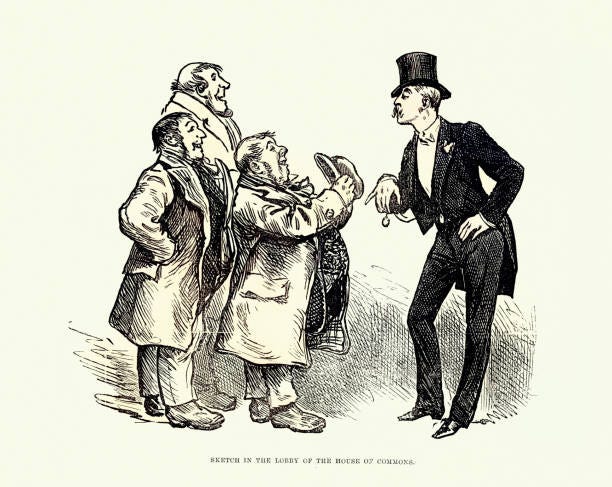
Historically, technological advancements have often exacerbated inequality rather than eliminated it, at least in the short term. The Industrial Revolution, for instance, created immense wealth for some while leaving others in squalor, and the digital revolution has similarly widened gaps between the tech-savvy elite and those left behind. The critical question is whether the upper class will retain an outsized ability to access and leverage AI's outputs. Those with wealth, education, and networks could be better positioned to harness AI tools—whether through access to proprietary models, advanced training, or the ability to invest in AI-driven enterprises.
Moreover, socioeconomic status in a post-AI world may not be defined solely by material wealth but by access to influence. Those who control or shape AI systems—engineers, policymakers, or corporate leaders—may form a new elite, while others are relegated to consuming AI outputs without agency. If this happens, the "permanent underclass" could be less about poverty and more about powerlessness, locked out of the systems that govern AI's role in society.
Will We See a Change in People’s Risk Profiles?
The rise of AI is already reshaping individual and collective risk profiles, and this trend is likely to intensify as we approach the hypothetical AI event horizon. A risk profile, in this context, refers to the trade-offs individuals make when deciding how to invest their time, resources, and energy in pursuit of upward mobility or stability. In an AI-driven world, these calculations are becoming more complex and urgent.
Historically, risk profiles were shaped by relatively stable factors: education, job market trends, and social networks. A college degree, for instance, was a low-risk bet for securing middle-class status. But as AI automates tasks across industries—from coding to creative writing to manual labor—the value of traditional credentials and skills is eroding. This shift forces individuals to reassess what constitutes a "safe" or "risky" path. For example, pursuing a career in a field like software engineering, once a golden ticket to upward mobility, now carries the risk of obsolescence as AI tools like code-generating models become more sophisticated.
At the same time, AI is lowering barriers to entry in other domains, creating new opportunities for those willing to take risks. Entrepreneurship, for instance, may become less daunting as AI tools enable individuals to prototype products, analyze markets, or manage logistics with minimal capital. The rise of AI-driven platforms has already democratized access to creative outlets—think of content creators leveraging AI to produce music, art, or videos. However, these opportunities come with their own risks: the market for AI-generated content is becoming saturated, and standing out requires not just technical skill but also branding, marketing, and luck.
The fear of being locked into a permanent underclass may push individuals toward riskier behaviors, such as speculative investments, in hopes of securing a foothold before the event horizon. This could lead to a bifurcated society: those who take calculated risks and succeed may join the new elite, while those who fail—or who lack the resources to take risks at all—may find themselves further marginalized.
The Role of Agency and Adaptation
Escaping the permanent underclass will likely depend on two key factors: agency and adaptation. Agency refers to an individual’s ability to make choices and act on them, which is often constrained by socioeconomic factors. Those in the traditional underclass—marked by poverty, limited education, or social exclusion—face systemic barriers to agency, such as lack of access to AI tools, training, or networks. Even in a world of abundant AI, these barriers may persist if access to advanced systems remains unequal.
Adaptation, meanwhile, is about how individuals and societies respond to AI’s disruption. The ability to pivot—whether by learning new skills, embracing AI as a collaborator, or finding niches where human ingenuity still matters—will be critical. For example, while AI can generate art, music, or writing, humans who combine AI tools with unique perspectives or emotional resonance may still carve out valuable roles. Similarly, fields requiring high levels of empathy, ethical judgment, or complex human interaction—think therapy, community organizing, or certain types of leadership—may remain resistant to full automation.However, adaptation is not a solo endeavor. Governments, institutions, and communities will need to play a role in fostering environments where adaptation is possible. This could mean investing in education systems that prioritize critical thinking and AI literacy over rote skills, or creating safety nets like UBI to reduce the risks of experimentation. Without such support, the burden of adaptation falls disproportionately on individuals, further entrenching the underclass.
The Sociological Implications: A New Social Contract?
From a sociological perspective, the concept of a permanent underclass in an AI-driven world raises profound questions about the social contract. If AI creates a society where only a small elite can thrive, what obligations do governments and institutions have to prevent systemic exclusion? Historically, social contracts have evolved to address inequality—think of labor laws during the Industrial Revolution or welfare systems in the 20th century. In the AI era, a new social contract may be needed, one that ensures equitable access to AI’s benefits while preserving human agency and dignity.
One potential model is a post-scarcity economy, where AI-driven abundance eliminates traditional poverty. However, as economist Thomas Piketty has argued, inequality often persists not because of scarcity but because of power dynamics. If AI concentrates power in the hands of a few—whether corporations, governments, or a new techno-elite—the underclass may not be defined by material want but by exclusion from decision-making and influence.Alternatively, we could see the emergence of a hybrid social structure, where traditional class distinctions coexist with new forms of stratification based on AI literacy, access, and adaptability. In this scenario, escaping the permanent underclass would require not just financial capital but also technological capital—the knowledge and tools to navigate an AI-driven world.
The Path Forward: Strategies for Escaping the Underclass
So, how does one escape the permanent underclass in an AI-driven future?
Some thoughts (albeit purely short/medium-term) emerge from the intersection of sociology, economics, and AI engineering:
Embrace AI as a Collaborator: Rather than competing with AI, individuals can leverage it to amplify their capabilities (note: this may only be a short term solution). This means learning to use AI tools effectively, whether for education, entrepreneurship, or creative pursuits. Platforms like grok.com or x.com offer accessible entry points for experimenting with AI, even for those with limited resources.
Cultivate Uniquely Human Skills: While AI can automate tasks, it (currently) struggles with qualities like empathy, creativity, and ethical judgment. Investing in these areas—through education, community engagement, or personal development—can create a niche where humans remain irreplaceable.
Build Technological Capital: AI literacy is becoming as essential as traditional literacy. Free or low-cost resources, such as online courses or open-source AI tools, can help individuals gain the skills needed to navigate an AI-driven economy.
Advocate for Systemic Change: Escaping the underclass is not just an individual pursuit but a collective one. Supporting policies that promote equitable access to AI, such as public investments in education or universal access to AI tools, can level the playing field.
Take Calculated Risks: In a rapidly changing world, playing it safe may be riskier than experimenting. Whether it’s starting a business, learning a new skill, or investing in emerging technologies, calculated risks may be the key to staying ahead of the AI curve.
Conclusion: Redefining Success in an AI-Driven World
The fear of a permanent underclass is a powerful motivator, but it also likely oversimplifies the complexities of an AI-driven future. Socioeconomic class may matter less in a world of infinite abundance, but power, agency, and access will likely remain critical.
As AI continues to reshape society, the challenge is not just to avoid obsolescence but to reimagine what it means to be human in a world where machines can do so much.